 Calorie Basics · August 6, 2026
Do Spayed or Neutered Cats Need Fewer Calories?
Yes. After surgery, many cats need fewer calories but eat more. Learn how much to change and how to watch weight.
Enter your cat’s weight, age, and food. You get a daily calorie goal, the cups or cans to serve, and a meal plan. The tool runs in your browser and stores nothing.
Open the cat calorie calculator →
FreeNo sign-upKittens to seniorsWet, dry, or mixed
A cat meal calculator turns body weight into a daily calorie goal. Then it turns that goal into food amounts. Labels list calories per cup, can, or kilogram, so the math gets messy fast. This tool handles it for you.
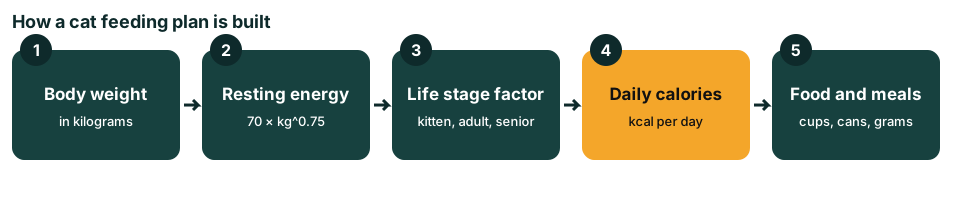
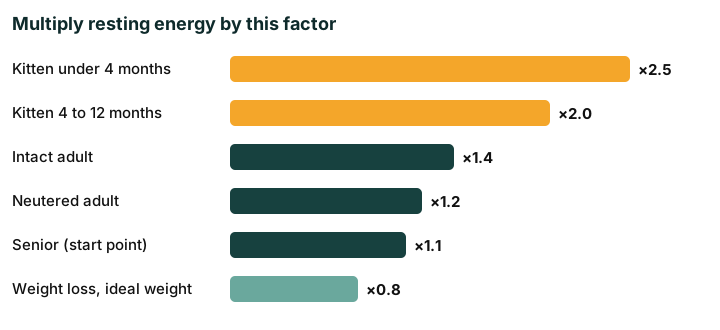
Every plan starts with resting energy requirement, or RER. The formula is 70 times body weight in kilograms, raised to the 0.75 power. A 10 lb cat weighs 4.5 kg and has an RER near 218 calories. A life stage factor then adjusts that number up or down.
Small cats burn more energy per pound than large cats. A 6 lb cat needs about 30 calories per pound. A 15 lb cat needs about 24.
| Weight | Daily kcal |
|---|---|
| 6 lb (2.7 kg) | ~178 |
| 8 lb (3.6 kg) | ~221 |
| 10 lb (4.5 kg) | ~261 |
| 12 lb (5.4 kg) | ~299 |
| 15 lb (6.8 kg) | ~354 |
Want the full breakdown? Read how many calories a cat needs per day or the resting energy requirement explained.
Kittens grow fast, so they need the most. Spaying or neutering lowers energy use, which is why intact adults get a higher factor. For weight loss, the calculator uses the ideal weight and cuts the result by 20 percent.
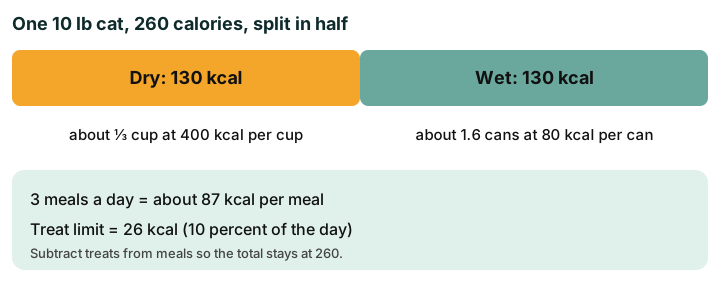
Dry food holds 300 to 500 calories per cup. A 3 oz can of wet food holds 70 to 100. So 130 calories equals about ⅓ cup of kibble or 1.6 cans. A mixed plan splits the daily goal between the two, and the calculator shows both amounts.
Pick foods marked “complete and balanced” for your cat’s life stage. See the wet vs. dry portions guide and how to read cat food calories for label tips.
Most adult cats do well on two to four meals a day. Kittens under six months need three or four. Divide the daily total evenly, so a 260 calorie day over three meals is about 87 calories each. Our guide on how often to feed a cat compares schedules.
Two cats can weigh the same and look very different. A body condition score from 1 to 9 shows the difference. You want a 4 or a 5. Run your hands along the ribs and look for a waist from above.
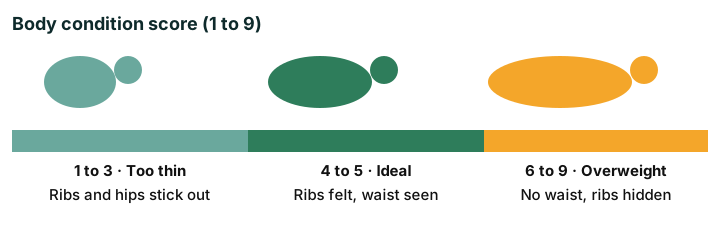
Learn the hands-on check in the body condition score guide.
Resting energy, calorie math, and what changes the number.
Cups, cans, grams, and how to read a label.
Feeding plans for kittens and senior cats.
Body condition, weight loss, and treat limits.
Calorie Basics · August 6, 2026Yes. After surgery, many cats need fewer calories but eat more. Learn how much to change and how to watch weight.
 Weight & Health · July 16, 2026
Treats should stay under 10 percent of daily calories. See how to count them and cut meals to match.
 Weight & Health · June 25, 2026
Safe cat weight loss is slow, about 0.5 to 1 percent of body weight per week. Follow these steps with your vet.
Browse all cat feeding guides →
The formulas follow published veterinary nutrition guidance, including WSAVA and AAHA guidelines and NRC nutrient requirements. We explain our process on the editorial policy page.
A neutered adult at 10 lb needs about 260 calories by the standard formula. Real-world feeding often lands between 200 and 260. Weigh your cat every few weeks and adjust by about 10 percent.
Bag charts give broad ranges, and they often run high. Use them as a cross-check. Your cat’s own weight and body shape matter more.
Yes. Choose a kitten age and the tool applies a growth factor. Kittens that grow slowly or seem weak need a vet visit.
Count them. Keep treats and extras under 10 percent of daily calories, then trim meals to match.